
Full course description

Sin, Symptom, & Crime
This course is offered as a virtual single session Workshop.
Takes place March 13th, 2027 from 2 pm-5 pm ET
Presenter:
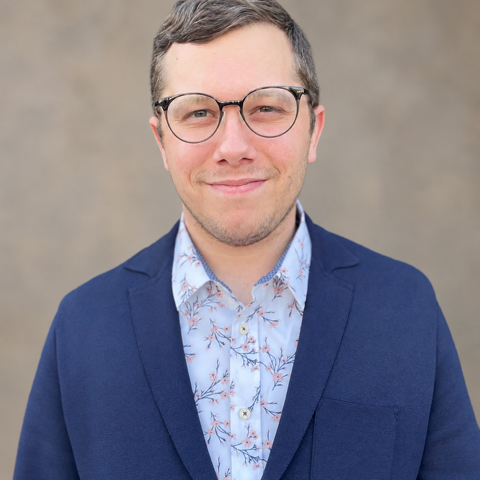
Adam Schneider PhD, Adam Schneider, PhD is a licensed psychologist in Washington State. He completed his Master of Arts in Counseling Psychology at The Seattle School of Theology & Psychology and his Doctorate in Clinical Psychology at Pacifica Graduate Institute. Adam currently works at the Monroe Correctional Complex as a supervising psychologist in a residential treatment unit working with the seriously mentally ill population and serves as Adjunct Faculty at The Seattle School where he teaches courses on assessment and psychopathology. His clinical experiences include providing individual, family, group psychotherapy, and psychological assessments within residential, wraparound outpatient, intensive outpatient, partial hospitalization, and inpatient settings for children, adolescents, and adults. He has published articles in Integratus: The Journal of the Catholic Psychotherapy Association, Psychosis: Psychological, Social, and Integrative Approaches, the Journal of Medical Humanities, and Psychoanalytische Perspectieven. Adam published his first book titled Psychoanalysis & Catholicism: From Freud to Francis with Routledge in 2026.
Description:
This workshop begins with three portraits: a scrupulous congregant whose absolution never seems to resolve their suffering, a patient in psychotherapy whose evident insight does not seem to change their symptoms, and an incarcerated individual who is about to be released from prison and return to a community that has no place for them. Each person has been judged or diagnosed correctly, and yet, change has not occurred. This workshop critically examines the juridical framework that has come to dominate conceptions of sin, symptom, and crime and their corresponding interventions. Through an understanding of psychoanalytic concepts such as superego, ego ideal, and ideal ego, participants will learn why this framework fails to produce change and reinforces isolation from the community. Finally, through a reading of selected literature from Wendell Berry and Flannery O’Conner, participants will understand how community is possible when the demand for a final authoritative verdict is surrendered in favor of sustained, laborious accompaniment. These movements will occur through mini lectures and small group break out discussions. Readings will be provided ahead of the workshop.
Learning Objectives:
- Identify the differences between moral, pathological, and statutory law, and explain how a juridical framework of judgment and verdict has come to shape how sin, symptom, and crime are understood and addressed.
- Compare the psychoanalytic concepts of superego, ego ideal, and ideal ego, and apply them to the three opening portraits to explain why a correct judgment or diagnosis can fail to produce change and can deepen isolation from community.
- Describe how selected works by Wendell Berry and Flannery O'Connor portray community as sustained accompaniment rather than final verdict, and identify at least one way to practice this kind of membership in their own pastoral, clinical, or correctional work.
Timeline and Requirements:
This course will take place on March 13th from 2:00pm to 5:00pm ET, fully online.
CE Sponsorship:
** Pending Confirmation
Fees and Policies:
Payment is due by credit card at registration. Refunds will be granted only up until registration closes at Noon on March 13th. No refunds will be granted for errors on the participant's part (such as incorrect name/email upon registration, login failure, scheduling conflicts, etc.).
We strive to host inclusive, accessible events that enable all individuals to engage fully. If you need to request an accommodation or ask a question about accessibility, please contact wcas.cece@bc.edu .
Additional offerings from the Woods College Office of Continuing Education and Community Engagement can be found on our website .